From Salt Flats to Painted Forests: 10 Hidden Gems in the Basque Country That Defy Expectations
In the northern corner of Spain where the mountains lean toward the sea and languages older than Latin still linger, the Basque Country offers more than first impressions suggest. Everyone knows Bilbao’s bold museums and the elegant curve of San Sebastián’s Concha Bay. But what if the real wonder lied elsewhere? — Scattered through forgotten paths, painted woods, and medieval salt gardens… What if the most compelling hidden gems in the Basque Country were the ones no one told you to visit?
![Zumaia, Gipuzkoa, Basque Country, Spain [Photograph]. Credit-Euskaldunaa. Wikimedia Commons. Licensed under CC BY-SA 4.0.](https://itinerartis.com/wp-content/uploads/2025/02/5.-Zumaia-Gipuzkoa-Basque-Country-Spain-Photograph.-Credit-Euskaldunaa.-Wikimedia-Commons.-Licensed-under-CC-BY-SA-4.0.avif)
This article isn’t about the places that fill guidebooks. It’s about the ones that challenge the very idea of what Spain looks like. The Basque Country hidden gems you’ll find here are shaped by geology, mythology, and the quiet determination of communities who’ve stayed rooted through centuries of change. They speak through architecture, through landscapes marked by volcanic upheaval and through artistic defiance.
You won’t find enormous signs pointing the way to these places. Some are tucked into cliffs where fishermen once watched the tides as closely as the stars. Others hide beneath painted branches or behind walls built to keep time still. What follows is not an itinerary, but an invitation—to step into the folds of a region that has never needed a spotlight to endure. Let these ten paths lead you not just through the hidden gems in the Basque Country, but into its deeper story.
Post last updated on April 1, 2025 (originally published on April 10, 2025) by Roberta Darie.
- 10 Hidden Gems in the Basque Country: Is the Off-the-Beaten-Path Journey Worth It?
- 1. Hondarribia: A Walled Town Where the Past Still Walks the Streets
- 2. Zumaia’s Flysch Cliffs: Time Etched in a Hidden Gem in the Basque Country
- 3. Gaztelugatxe: Climb to the Chapel Where Legends Live
- 4. Elantxobe: The Vertical Village That Clings to the Sea
- 5. Urdaibai Biosphere Reserve: Where the Wild Finds Peace
- 6. Oma Forest: Where the Trees Keep Secrets in Color
- 7. Gernika: Where Guernica Was Born, and Peace Lives On
- 8. Orduña: The Balcony of the Basque Country
- 9. Laguardia: A Town That Breathes Wine and Memory
- 10. Salinas de Añana: Salted by Time, Not the Sea
- Walking Through Wonder: A Farewell to the Hidden Gems in the Basque Country
“To find the universal elements enough; to find the air and the water exhilarating… to be refreshed by a morning walk or an evening saunter—these are some of the rewards of the simple life.”
― John Burroughs
![Gaztelugatxe and Bakio [Photograph]. Credit: Wolffoxylady. Wikimedia Commons. Licensed under Creative Commons Attribution-Share Alike 4.0 International license.](https://itinerartis.com/wp-content/uploads/2025/01/9.-Gaztelugatxe-and-Bakio-Photograph.-Credit-Wolffoxylady.-Wikimedia-Commons.-Licensed-under-Creative-Commons-Attribution-Share-Alik.webp)
10 Hidden Gems in the Basque Country: Is the Off-the-Beaten-Path Journey Worth It?
Travelers often ask if stepping beyond familiar landmarks is worth the effort. The short answer? Absolutely. The Basque Country’s hidden gems offer something rare and quietly powerful—authenticity unspoiled by fame. While Bilbao’s Guggenheim dazzles visitors and San Sebastián lures crowds to its beaches, the heart of Basque culture beats gently in these overlooked places.
Beyond postcard-perfect scenes await tiny coastal villages, ancient salt terraces, and forests transformed by paintbrushes rather than autumn leaves. This quieter Basque Country invites you to listen closely. Not to tour guides, but to legends whispered by fishermen at Elantxobe or footsteps echoing through Laguardia’s medieval cellars. Here, centuries of tradition aren’t merely preserved in museums, but alive in daily life, from the rhythm of pelota games to the taste of crisp txakoli wine.
Geology also tells its own stories here, ones rarely heard. At Zumaia, towering cliffs reveal rock layers shaped over millions of years, while the salt flats at Añana have sustained communities since Roman times. Artists leave their mark, too—like Agustín Ibarrola’s colorful Oma Forest, blurring the boundaries between nature and canvas. These hidden gems in the Basque Country promise more than scenery; they offer experiences you can’t replicate elsewhere.
Ultimately, the question isn’t whether these Basque Country hidden gems deserve your time. It’s whether you’re ready to embrace travel as discovery—willing to swap popular sights for secret wonders, comfort for curiosity. If the answer is yes, these ten extraordinary places are exactly what you’ve been missing.
![Aerial View of Urdaibai Biosphere Reserve, Bizkaia, Basque Country, Spain [Edited Photograph]. Credit: Mikel Arrazola. Licensed under CC BY 4.0.](https://itinerartis.com/wp-content/uploads/2025/04/2.-Aerial-View-of-Urdaibai-Biosphere-Reserve-Bizkaia-Basque-Country-Spain-Edited-Photograph.-Credit-Mikel-Arrazola.-Licensed-under-CC-BY-4.0.jpg)
1. Hondarribia: A Walled Town Where the Past Still Walks the Streets
Facing the French border across the Bidasoa River, Hondarribia feels like a footnote in most guidebooks—and yet, it holds entire chapters of Basque history. Enclosed by 15th-century walls and crowned by the Parador, a former castle of Emperor Charles V, this coastal town is one of the most architecturally intact hidden gems in the Basque Country.
Step through the Puerta de Santa María, and you’re in the old town, where cobbled lanes wind past timber-framed houses painted in reds, greens, and blues. Each balcony draped with flowers, each doorway inscribed with a family crest. The smell of grilled fish drifts up from the marina, and locals still gather in the Plaza de Armas as if time hadn’t quite caught them.
Hondarribia has long stood at a cultural crossroads. It was a military stronghold, a fishing village, and a site of artistic exchange. Today, it’s also home to one of the region’s best pintxos scenes—especially in the Marina district, where modern chefs reinterpret tradition.
If you go, consider visiting during the Alarde festival in September, a reenactment rooted in a 1638 siege. Or simply stroll the ramparts at golden hour. Among the Basque Country hidden gems, Hondarribia is that rare place where the past doesn’t just echo—it walks beside you.
![Parador de Hondarribia and Church of Nuestra Señora de la Asunción y del Manzano, Hondarribia, Basque Country, Spain [Edited Photograph]. Credit: Jorge Franganillo. Licensed under CC BY 2.0.](https://itinerartis.com/wp-content/uploads/2025/03/1.-Parador-de-Hondarribia-and-Church-of-Nuestra-Senora-de-la-Asuncion-y-del-Manzano-Hondarribia-Basque-Country-Spain-Edited-Photograph.-Credit-Jorge-Franganillo.-Lic.jpg)
2. Zumaia’s Flysch Cliffs: Time Etched in a Hidden Gem in the Basque Country
Along the wild Basque coastline, where waves hammer the rocks with tireless rhythm, the Flysch cliffs of Zumaia rise like pages in an open book—except these pages are made of stone. Stretching for over 13 kilometers (ca. 8 miles), the Flysch forms one of Europe’s most extraordinary geological records, layering 60 million years of Earth’s history in sharp, linear bands.
Each stripe tells a story: ancient seabeds, extinct ecosystems, even the impact layer left by the asteroid that ended the age of dinosaurs. Scientists come to study it. Travelers come to stand in awe. These cliffs aren’t just beautiful—they’re revealing. Among the hidden gems in the Basque Country, this one speaks of time itself, carved and exposed by the sea.
The walk along the Flysch Route is sensory in every way. Underfoot, rock fragments crunch. To your left, steep green hills. To your right, Atlantic surf. The wind carries salt and the occasional cry of seabirds. Depending on the tide, you may even descend to the exposed seabed—jagged and strangely lunar.
Zumaia itself, a peaceful coastal town, is worth lingering in. Its old town is compact, its pintxos satisfying, and the San Telmo Hermitage offers one of the best coastal views in northern Spain.
If you go, check the tide charts. The best time to explore the Flysch is at low tide. And bring your curiosity. Because few Basque Country hidden gems allow you to walk across the layers of prehistory, one step at a time.
![Zumaia, Basque Country, Spain [Photograph]. Credit: Pacopac. Wikimedia Commons. Licensed under CC BY-SA 4.0.](https://itinerartis.com/wp-content/uploads/2025/02/4.-Zumaia-Basque-Country-Spain-Photograph.-Credit-Pacopac.-Wikimedia-Commons.-Licensed-under-CC-BY-SA-4.0.avif)
3. Gaztelugatxe: Climb to the Chapel Where Legends Live
There’s a moment—somewhere around step 173—when the sea breeze turns sharp and the Atlantic crashes louder than before. The path zigzags up a stone bridge connecting the mainland to a rocky islet. At the top stands a modest hermitage: San Juan de Gaztelugatxe, dedicated to John the Baptist and wrapped in centuries of legend.
This site, perched above the Biscayan coast, is more than just photogenic. It’s one of the Basque Country hidden gems where myth and geology meet. The islet, formed by volcanic activity and shaped by fierce tides, has been a site of devotion since at least the 9th century. Pirates, pilgrims, and kings have all passed through. Today, visitors ring the chapel’s bell three times—said to bring good luck—and leave behind stones, prayers, or quiet awe.
The experience is intensely physical: 241 uneven steps, carved into stone and memory. But it’s also sensorial. The scent of salt clings to the wind. The roar of waves echoes off the cliffs. The views stretch from green headlands to deep blue horizon.
If you go, wear sturdy shoes and check sea conditions before setting out. Summer can be crowded, so shoulder seasons offer a more reflective visit. Among the most iconic hidden gems in the Basque Country, Gaztelugatxe doesn’t just live up to the stories—it becomes one of your own.
![San Juan de Gaztelugatxe [Photograph]. Credit: Candi. Originally posted on Flickr. Reviewed and confirmed under Creative Commons Attribution 2.0 Generic license.](https://itinerartis.com/wp-content/uploads/2025/01/11.-San-Juan-de-Gaztelugatxe-Photograph.-Credit-Candi.-Originally-posted-on-Flickr.-Reviewed-and-confirmed-under-Creative-Commons-At.webp)
4. Elantxobe: The Vertical Village That Clings to the Sea
Elantxobe isn’t designed for cars—or haste. Built into a steep cliffside on the Basque coast, this fishing village unfolds vertically, with narrow streets that climb like staircases and rooftops that seem to hover above the waves. From the harbor, the town appears carved into the rock itself, its pastel façades weathered by sea wind and salt.
Once a whaling port, Elantxobe’s history is inseparable from the Atlantic. Even today, you might see fishermen repairing nets by hand or unloading crates of fresh bonito. The village’s amphitheater-like layout wasn’t an aesthetic choice. It was a practical one, allowing residents to watch the sea and the sky at once. In a region where storms arrive without warning, that view has always mattered.
Wander upward, and the sounds fade—replaced by gulls, church bells, and the rhythmic hush of distant surf. At the top, a small square offers panoramic views over the Bay of Biscay. It’s the kind of place where you sit longer than you planned, just to breathe.
If you go, pack good shoes and take your time. Parking is limited, but walking is part of the charm. Among the many hidden gems in the Basque Country, Elantxobe stands out not for what it has, but for what it holds onto. Tradition, space, and sea—all stitched together in stone. A true Basque Country hidden gem, especially for those who believe beauty is best seen from strange angles.
![Classical view of Elantxobe from the balcony [Photograph]. Credit- Ander Abadia Zallo. Wikimedia Commons. Licensed under CC BY-SA 4.0.](https://itinerartis.com/wp-content/uploads/2025/01/3.-Classical-view-of-Elantxobe-from-the-balcony-Photograph.-Credit-Ander-Abadia-Zallo.-Wikimedia-Commons.-Licensed-under-CC-BY-SA-4.0-1024x573.jpg)
5. Urdaibai Biosphere Reserve: Where the Wild Finds Peace
In the heart of the Basque region, not far from Gernika, the Urdaibai Biosphere Reserve unfolds like a living tapestry—where estuaries meet oak forests, and herons trace arcs over mirror-like wetlands. Designated by UNESCO in 1984, it’s one of the most ecologically rich hidden gems in the Basque Country, offering a rare harmony between wild beauty and cultural heritage.
The landscape shifts with every step. One moment, you’re on a sandy beach facing the Bay of Biscay; the next, you’re in the cool shade of a forest trail, the air dense with the scent of moss and salt. The reserve spans over 220 square kilometers (85 square miles), sheltering more than 250 bird species, including migratory flocks that pause here between Africa and Northern Europe.
But Urdaibai isn’t just for ornithologists. It’s a place for anyone drawn to stillness and complexity. Nearby towns like Mundaka and Gautegiz Arteaga add layers of local life—surf culture, medieval towers, slow rhythms.
If you go, bring binoculars and patience. The marshes at low tide are a theater of wings and reflections. For panoramic views, climb to the hermitage of San Pedro de Atxarre. Among the Basque Country hidden gems, Urdaibai speaks softly but with clarity: in this corner of northern Spain, the wild still has space to breathe. And so do you.
![Urdaibai, Bizkaia, Basque Country, Spain [Edited Photograph]. Credit: Mikel Arrazola. Licensed under CC BY 3.0 ES.](https://itinerartis.com/wp-content/uploads/2025/04/3.-Urdaibai-Bizkaia-Basque-Country-Spain-Edited-Photograph.-Credit-Mikel-Arrazola.-Licensed-under-CC-BY-3.0-ES.jpg)
6. Oma Forest: Where the Trees Keep Secrets in Color
When you step into Oma Forest, what first appears as an ordinary pine grove becomes something stranger. Trees marked with bright spirals, eyes, and broken patterns that align only when you stand in just the right spot. This painted forest, created by Basque artist Agustín Ibarrola in the 1980s, is a living artwork hidden in plain sight. Here, nature and imagination conspire to turn a walk in the woods into a slow, visual riddle.
Set within the Urdaibai Biosphere Reserve, Oma is among the most thought-provoking hidden gems in the Basque Country. Ibarrola’s intervention wasn’t purely aesthetic. It emerged in the aftermath of a long and repressive dictatorship led by General Francisco Franco, who concentrated state power until his death in 1975. For decades, Basque culture and language were marginalized. Painting the forest became an act of reclamation, a way to let the land speak when voices had been silenced.
The experience is quiet but immersive. Resin hangs faintly in the air. Footsteps crunch over needles and earth. Shapes disappear and reappear as you move—some playful, others haunting. If you go, prepare for a 3 km (1.8-mile) hike through uneven terrain. And go slowly. Among the Basque Country hidden gems, Oma Forest doesn’t just invite you to look—it asks you to see.
![Oma Forest, Kortezubi, Basque Country, Spain [Edited Photograph]. Credit: Simoncio. Licensed under CC BY-SA 4.0.](https://itinerartis.com/wp-content/uploads/2025/04/4.-Oma-Forest-Kortezubi-Basque-Country-Spain-Edited-Photograph.-Credit-Simoncio.-Licensed-under-CC-BY-SA-4.0.jpg)
.JPG)
7. Gernika: Where Guernica Was Born, and Peace Lives On
Few places in northern Spain carry a name as globally resonant as Gernika. On April 26, 1937, this market town was bombed by Nazi and Italian planes in one of the earliest aerial attacks on civilians during the Spanish Civil War. The event shocked the world—and inspired Picasso’s Guernica, now one of the most powerful anti-war paintings of the 20th century.
But Gernika is more than a tragedy. It’s a living place, layered with history, resistance, and quiet dignity. At its heart stands the Árbol de Gernika—an oak tree under which Basque leaders traditionally swore to uphold local laws. That tree, or rather its descendants, still grows beside the Assembly House, symbolizing the enduring spirit of Basque autonomy.
A visit here isn’t just for art historians or political thinkers. The Gernika Peace Museum offers a moving, multilingual journey through the town’s past and the global pursuit of peace. Exhibits are personal and tactile—letters, voices, photos, fragments of memory.
Among the hidden gems in the Basque Country, Gernika holds a special place. It doesn’t dazzle with scenery or cuisine. It invites reflection. So, if you go, allow time for both museum and town. And when you stand beneath the oak, remember that not all Basque Country hidden gems are made of stone—some are planted in hope.
![The Old Tree of Gernika, Gernika-Lumo, Basque Country, Spain [Edited Photograph]. Credit: Mario Martí. Licensed under CC BY 2.0.](https://itinerartis.com/wp-content/uploads/2025/04/5.-The-Old-Tree-of-Gernika-Gernika-Lumo-Basque-Country-Spain-Edited-Photograph.-Credit-Mario-Marti.-Licensed-under-CC-BY-2.0.jpg)
.jpg)
8. Orduña: The Balcony of the Basque Country
Not all towns in northern Spain arrive with fanfare. Some, like Orduña, greet you with a view. From its elevated perch at 280 meters (ca. 919 feet), the Mirador del Monte Santiago overlooks the Nervión River canyon—Spain’s tallest waterfall tumbling down a sheer cliff over 220 meters (ca. 720 feet). But this town offers more than scenery; it’s a place where history settles gently into stone.
Orduña is the only city in Biscay with official city status, granted by the Catholic Monarchs in the 15th century. Its arcaded market square, once a hub for Castilian wool merchants and Basque traders, still buzzes on weekends. Baroque façades, a neoclassical church, and the austere elegance of the Renaissance-era customs house all speak to the town’s former importance along the trade route between Bilbao and the Castilian plateau.
But perhaps its real charm lies in how slowly it moves. Bells mark the hour. Locals greet each other by name. The scent of woodsmoke and simmering stews drifts from kitchens tucked behind heavy doors.
Among the hidden gems in the Basque Country, Orduña is a rare blend of altitude and atmosphere. If you go, drive or hike up to the Salto del Nervión after rainfall—it’s seasonal, but unforgettable. Then descend into town for a warm meal and a quiet evening. Few Basque Country hidden gems offer such a poetic contrast between heights and hearth.
![Santuario de Nuestra Señora La Antigua, Orduña, Basque Country, Spain [Edited Photograph]. Credit: Basotxerri. Licensed under CC BY-SA 4.0.](https://itinerartis.com/wp-content/uploads/2025/04/6.-Santuario-de-Nuestra-Senora-La-Antigua-Orduna-Basque-Country-Spain-Edited-Photograph.-Credit-Basotxerri.-Licensed-under-CC-BY-SA-4.0.jpg)

9. Laguardia: A Town That Breathes Wine and Memory
Laguardia doesn’t sprawl. It stands still—perched above the Rioja Alavesa vineyards, enclosed by medieval walls, and laced with narrow lanes that seem to whisper. Beneath its stone streets lies a labyrinth of centuries-old wine cellars, still in use. Walk too quickly and you might miss the hatch beneath your feet that leads down into cool, earthen chambers where oak barrels rest and history ferments.
Founded in the 10th century as a defensive outpost, Laguardia has guarded more than just its borders. It has preserved a unique blend of Basque and Castilian culture, visible in its Romanesque churches, Gothic porticoes, and the coats of arms etched into façades. The Iglesia de Santa María de los Reyes, with its polychrome carved entrance, remains one of the finest in northern Spain.
Among the hidden gems in the Basque Country, Laguardia feels remarkably complete—where wine isn’t a trend but a way of understanding time. The town’s location offers sweeping views of the Sierra de Cantabria, especially striking at dusk when the vineyards begin to glow.
If you go, book a guided tasting at a family-run bodega—some are accessible only through underground tunnels. And take your time. The best of the Basque Country hidden gems ask for more than a visit. They ask you to linger. And Laguardia rewards that pause with every glass.
![Tympanum of Santa María de los Reyes, Laguardia, Basque Country [Edited Photograph]. Credit: Jl FilpoC. Licensed under CC BY-SA 4.0.](https://itinerartis.com/wp-content/uploads/2025/04/8.-Tympanum-of-Santa-Maria-de-los-Reyes-Laguardia-Basque-Country-Edited-Photograph.-Credit-Jl-FilpoC.-Licensed-under-CC-BY-SA-4.0.jpg)

10. Salinas de Añana: Salted by Time, Not the Sea
In the heart of Álava, where the Basque hills ripple into sunlit valleys, lies a landscape that looks more like a geometric puzzle than a salt flat. But Salinas de Añana isn’t a mirage. It’s one of the oldest active saltworks in Europe, with over 6,500 salt pans stepped into the earth like stony rice terraces. These salt flats have been in use for more than 7,000 years, their origin tracing back to the Bronze Age. And yet, many travelers miss them entirely.
Unlike most salt sites shaped by coastal tides, Añana’s saltwater rises from underground springs. The brine, rich in minerals, flows through hand-built wooden channels into shallow pools, where it slowly evaporates under the sun. The smell of warm stone and the faint metallic tang of salt linger in the air. In summer, the flats shimmer white, their pale crust crackling underfoot.
What makes this place one of the most enduring Basque Country hidden gems is not just its beauty, but its resilience. Here, salt is still harvested by hand, just as it was in Roman times.
If you go, join a guided visit, and don’t skip the small interpretation center. Salinas de Añana may not make every “what to see in Basque Country” list, but among the true hidden gems in the Basque Country, it tells a story of ingenuity, tradition, and time itself.
![Salinas de Añana, Álava, Basque Country, Spain [Photograph]. Credit: Txo. Wikimedia Commons. Licensed under CC0 1.0 Public Domain Dedication.](https://itinerartis.com/wp-content/uploads/2025/02/8.-Salinas-de-Anana-Alava-Basque-Country-Spain-Photograph.-Credit-Txo.-Wikimedia-Commons.-Licensed-under-CC0-1.0-Public-Domain-Dedication.avif)
Walking Through Wonder: A Farewell to the Hidden Gems in the Basque Country
Some places stay with you not because they dazzled, but because they revealed something—about the land, about time, maybe even about you. The hidden gems in the Basque Country aren’t scenes to be snapped and forgotten. They unfold slowly: salt that glitters like frost, painted pines that only align when you do, villages that stack themselves into cliffs as if the earth had leaned forward to listen.
You don’t just pass through these places. You read them—layer by layer, like the Flysch at Zumaia or the cellars beneath Laguardia. They are where history lingers in the details: in hand-laid stones, in bell towers shaped by myth, in trails where geology and legend walk side by side.
So if you’re heading north, take the road that wavers. The one that swaps highways for hermitages and follows stories instead of signs. The Basque Country hidden gems in this article won’t demand your attention. But if you give it freely, they’ll change the way you understand Spain—and perhaps the way you travel altogether.


You May Also Like
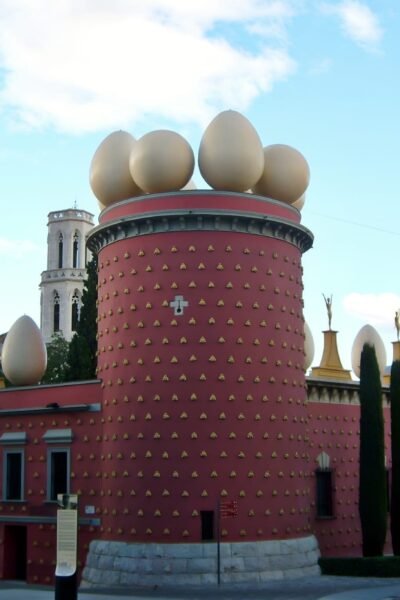
The 10 best places to visit from Barcelona by train – wonderful day-trips in Catalonia
Tella: a guide to the charming town of legendary witches Harry Potter fans will love